Road Safety
As part of the Local Government Road Safety Program, Mosman Council’s Road Safety Officer provides educational campaigns to help reduce crashes and casualties on our local roads.
Below are some of the current projects and road safety information.
Yellow lines
Do you know the meaning of yellow kerb lines?
Yellow lines painted near the edge of the road (otherwise known as the kerb) show that there are stopping restrictions as well as telling you what rules apply to that particular section of road.
An unbroken (continuous) yellow kerb line is a NO STOPPING line. You must not stop here for any reason except a medical or similar emergency.
These unbroken yellow lines have exactly the same rules as a no stopping sign and are enforceable both when a sign is present, but also when a sign is NOT present. No stopping zones are implemented in areas to improve safety and reduce signage and distractions.
A broken (dashed) yellow kerb line is a CLEARWAY line. You must not stop at the edge of the road between the hours shown on the sign except in a medical or similar emergency. Buses, taxis and hire cars may only stop to pick up or set down passengers.
Slow down in our streets
Mosman Council encourages drivers to slow down in local streets to make our roads safer for motorists, pedestrians and cyclists.
Transport for NSW data shows that in the five years between 2020-2024, 10% of all casualty crashes in the Mosman LGA involved speeding.
Speed and road safety is everyone’s responsibility.
The ‘Slow Down in My Street’ campaign is a reminder to each of us to slow down, pay attention to the speed limits, conditions and our surroundings and be the safest drivers we can.
The faster you travel, the longer it takes to stop. Even travelling at just 5km over the speed limit in good weather conditions can put you, your passengers, pedestrians and other road users at an increased risk. So, reducing your speed on our roads is a small thing we can all do, that will save local lives.
The overall road safety initiative forms part of the NSW state government 'Towards Zero' campaign.
Frequently Misunderstood Traffic Rules
 |
No Stopping: Vehicles must not stop in a No Stopping area for any length of time – No stopping means no stopping. Dropping off or picking up passengers is not permitted in these areas. A continuous yellow edge line also indicates a No Stopping zone. Fine: exceeds $268 ($344 and 2 demerit points in a school zone). |
| Unbroken yellow kerb line: An unbroken yellow kerb line is a no stopping line and therefore the same rules apply as for No Stopping sign. Drivers must not stop for any reason other than a medical or similar emergency. Fine: exceeds $268 ($344 and 2 demerit points in a school zone). |
 |
No Parking: Vehicles may stop in a No Parking area to pick up or drop off goods or passengers provided drivers stay within three meters of their vehicle and are not parked in the No Parking zone for longer than two minutes. Fine: exceeds $191 and 2 demerit points (in a school zone). |
 |
Bus Zones: Must be kept clear at all times. Vehicles that are parked and stopped in bus zones create problems for bus drivers pulling into and out of these bays. Buses forced to double park and manoeuvre through inadequate space is extremely dangerous. It is illegal to stop in a bus zone for any period of time. Fine: exceeds $344 and 2 demerit points (in a school zone). |
| Driveways: Be conscious of where you park your car, do not park across, blocking or partly blocking a driveway. Think of others and the residents of the house you are blocking need emergency access at all times. Fine: exceeds $114. |
| Centre for Road Safety: Stay up to date with current road safety campaigns, statistics and road rules via the Centre for Road Safety website. |
Child Car Seat Checking
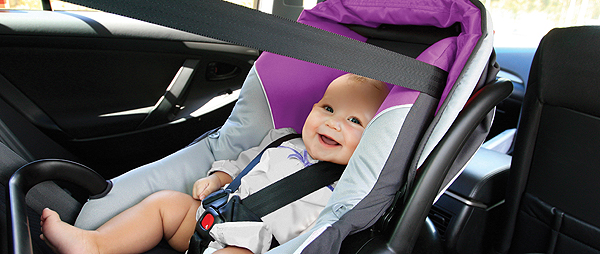
Child Seat Restraint Vouchers for Mosman Residents
Did you know up to 90% of child car seats are fitted incorrectly?
A correctly fitted child car seat can significantly reduce the risk of injury in an accident by up to 70%, that's why it's vital that seats are fitted by a professional.
Mosman Council and Transport for NSW are offering a limited number of vouchers for professional child car seat fitting services to local residents from 1 July – 31 October 2026.
Each voucher covers the fitting/checking of up to TWO child car seats per household.
Three Fitting Locations
- North Shore Private Hospital - 8 Reserve Rd, St Leonards
- Sydney Adventist Hospital - 183 Fox Valley Rd, Wahroonga
- At your Mosman residence - $25 mobile call out fee
What happens after you register?
- You will receive a confirmation email with instructions on how to make a booking
- Your TrackID Number is your voucher code that you will be required to provide to our authorised fitter
Please note: Vouchers have an 8-week expiry date from the date of registration. Program only runs July-October 2026.
Before registering, please refer to the Terms and Conditions below.
Terms and Conditions
- Available only to Mosman residents and ratepayers during July – October 2026 or until vouchers run out
- The voucher covers the fitting/checking/reinstallation of TWO (2) child car seat per household at your Mosman residence
- Appointments are limited and subject to availability and funding
- Family day care providers are not eligible
- The “voucher” is only redeemable at our authorised fitter
- Any additional parts and accessories you may require, plus the $25 mobile fee if the fitting is taking place at your Mosman home, will be charged to you directly by the fitter on the day
For more information on different types of child car seats, how they perform in crashes, and to check that your child is in the correct type of seat, please click here.
Walking is Fun
Mosman Council supports Road Safety for school children in Mosman though various initiatives through, and in conjunction with the National Road Safety Week each year, Council encourages all school children in the Mosman area to get involved in 'Walk Safely to School Day'. Children are encouraged to walk, ride and catch public transport safely to school. The day aims to promote road safety, health, public transport and the environment. Children that ride a bike to school can also take part, while children that are required to catch public transport, can alight from an earlier stop and walk the last part of the journey to school.
For more information on National Road Safety Week visit roadsafetyweek.com.au
Walk to School Day brings together the ideas of road safety, wellbeing and healthy habits for children.
Walking has a number of positive benefits for children:
- It promotes physical activity. In an age where sedentary lifestyles are becoming increasingly common, walking to school provides an opportunity for children to engage in regular exercise. This can help to improve their cardiovascular health, build strength and endurance, and maintain a healthy weight. Regular physical activity has also been linked to improved academic performance, as it can enhance concentration and cognitive abilities.
- Can foster a sense of independence and responsibility in children. It allows them to navigate their local environment, learn about road safety, and develop skills such as time management and problem-solving. This can contribute to their personal development and prepare them for future responsibilities.
- Is an environmentally friendly mode of transportation. It reduces the number of cars on the road, thereby decreasing traffic congestion and air pollution. This not only benefits the environment but also creates a safer and more pleasant community for everyone.
- Can provide a valuable opportunity for social interaction. Whether children walk with their parents, siblings, or friends, this time can be used to strengthen relationships, share experiences, and create lasting memories. It’s a wonderful way to start and end the school day on a positive note.
Walking to school is a simple activity that offers numerous benefits for children’s health, development, and well-being. It’s a habit that’s worth promoting for the betterment of our children and our communities.
Pedestrian Safety - Be Aware. Move with Care
When driving watch out for pedestrians and cyclists on and around our roads. With people out and about exercising, extra care is needed as it’s easy to become complacent, especially on a familiar route.
Be mindful when opening vehicle doors, check blind spots especially when reversing and slow down when approaching pedestrian crossings. Slow down, give way to pedestrians and keep to the 10km/h speed limit in shared zones, be alert and aware when in 40km/h high pedestrian areas.
Pedestrians should always use safe crossings or crossing points where available. It’s important to have your head in the moment and make safe decisions when crossing the road. Never assume that an approaching vehicle can see you or will stop for you – wait until all vehicles have stopped before you step off the kerb.
For more tips and information check out the Centre for Road Safety website.